
"aroma development"
20000 article(s) found

A brief introduction to the History and Culture of the Origin and Development of Fine Coffee beans in Huilan, Colombia
Flavor: full of acidity, caramel, sweet nuts, chocolate, red wine flavor, admirable fruit flavor. Palate: full viscosity, caramel sweetness, supple and pleasant fruit acid. Roasting degree: medium and deep roasting Columbia Huilan (Colombia huila): located in southwestern Colombia, is one of the major coffee cultivation areas. Because it's all over Huilan area.

A brief introduction to the origin, development, history and culture of the noble Cuban Crystal Mountain boutique coffee beans.
Crystal Mountain Coffee beans are typical island beans with a clean and delicate taste, slightly sour taste, not strong but long-lasting, with sweet fruit aromas. The coffee made by it was owned by Jane in 1748, and coffee was introduced to Cuba from Domiga, and Cuba has been growing coffee ever since. With fertile land, humid climate and abundant Rain Water, Cuba can be called a natural treasure land for coffee cultivation. Suitable self

A brief introduction to the History and Culture of the Origin and Development of Santo Domingo Coffee
Unlike coffee produced in Haiti, most of the coffee grown in the Dominican Republic has been washed, which is a symbol of high quality. Miniga Coffee uses a washing method to treat coffee beans, so that the quality of treated coffee beans is more guaranteed. The coffee beans treated by washing method retain more original flavor than the drying method, and the aroma is pure and soft. Carefully selected and made in this way

A brief introduction to the Origin, Development, History and Culture of Kaddura Fine Coffee beans in Nicaragua
In Guatemala, there are seven major coffee producing areas, each producing different coffee flavors, but to sum up, Guatemalan coffee shows a mild and mellow overall texture, elegant aroma and acidity similar to acid and pleasant acidity, becoming the aristocracy of coffee, among which the coffee from Antigua (AntiguaClassic) has won the global coffee gluttons.

Hand-made Coffee | hand-made Coffee in Qianjie Autumn | blending Coffee and roasting
Professional coffee knowledge exchange more coffee bean information please follow the coffee workshop (Wechat official account cafe_style) recently more than half a month of debugging and data collation, we are concentrating on research and development [autumn hand matching], let's share with you our achievements so far ~ [flavor qualitative] at the beginning of research and development, we first need to determine what autumn proposition should express.

A brief introduction to the History and Culture of the Origin and Development of Fine Coffee beans in Chi Meyer Manor with long-lasting aroma
Papua New Guinea has a detached and primitive natural environment and its land is vast and fertile. Its unique volcanic rock soil and abundant rainfall create excellent natural conditions for the growth of coffee. The top coffee beans in Papua New Guinea are as beautiful and precious as the country's national bird of paradise. Large manor / farm (plantation), usually with its own washing plant

Aroma and throat Rhyme of Africa, Rwanda, Arabica Coffee Bean Origin, Development, History and Culture
Another noteworthy thing on the packaging is a list of relevant words from the United States, which is the American aid program (USAID). Because of this plan, the road to fine goods in Rwanda has also gone much smoothly. OCIR has made reference to many successful ways to improve the quality of its exports, including the mechanism for setting up cooperatives, which is an indispensable road to boutique coffee.

A brief introduction to the History and Culture of the Origin and Development of Costa Rican Yerzaro Coffee
Natural resources include iron, manganese, mercury, bauxite, gold and silver, among which the reserves of bauxite, iron and coal reach 150 million tons, 400 million tons and 50 million tons respectively. The recent situation is mainly distributed in the central gold belt area of the northwestern Tilaran Cordillera Mountains. Calcium carbonate is distributed in the northwest and has high taste. The purity of calcium carbonate extracted from limestone can reach 99.5%. Brother

A brief introduction to the Origin, Development, History and Culture of Fine Coffee beans in Xuemai Manor
We know that Arabica coffee cannot be grown in cold places above 2000 meters above sea level. if the altitude is too high, coffee trees will frost because the temperature is too low. So Bolivian coffee is mainly grown in the Yungas region northeast of La Paz. It borders the Amazon basin and is about 1500-2500 meters above sea level with an average annual temperature of about 10-15 ℃. Therefore, guarantee
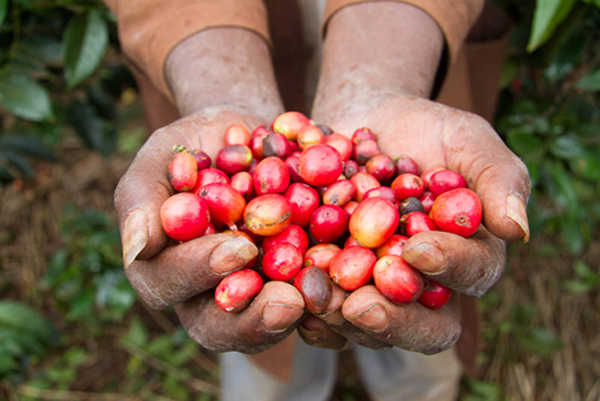
Introduction of boutique coffee producing areas: introduction and development history of Colombian coffee
Introduction: Colombian coffee is a representative and excellent variety of Arabica coffee. It is a traditional deep-roasted coffee with a strong and memorable flavor. Its aroma is rich and thick, with clear high-quality acidity, high balance, sometimes nutty taste and endless aftertaste. Colombian coffee is quite good in appearance and quality.

The taste of coffee beans introduces the development of Starbucks.
A good coffee entrance will have a sour feeling, coupled with different production methods in each place has a strong fragrance, the aroma is divided into fruity, flower-scented. The best coffee producing areas are Blue Mountain Coffee in Jamaica, mocha Coffee in Cedamo, Ethiopia, Coffee near Mount Talasu in Costa Rica, Kona in Hawaii and Malabar in India.

A brief introduction to the History and Culture of the Origin and Development of Rose Summer Fine Coffee beans
The species of Geisha was discovered in the rose forest of Ethiopia in 1931 and then sent to the Coffee Institute in Kenya. It was introduced to Uganda and Tanzania in 1936 and introduced in Costa Rica in 1953, until one day, Don Pachi was originally brought to Costa Rica from the town of GESHA in southwestern Ethiopia.

A brief introduction to the history and culture of the origin and development of Panamanian boutique coffee beans with the highest performance-to-price ratio
Mr. Wilford, the owner of the estate, in addition to the extremely strict treatment of coffee cultivation, the purification of raw beans after treatment is also more stringent than those of the same industry. In the case of Alida of Panama, after processing raw beans, it needs to go through more than 5 months of low-temperature Resting to remove green, so that the flavor of coffee can have a more balanced and full development. ) Cryogenic Resting was developed by coffee guru GeorgeHowell in 200,

A brief introduction to the History and Culture of the Origin and Development of Rose Summer Fine Coffee beans
The species of Geisha was discovered in the rose forest of Ethiopia in 1931 and then sent to the Coffee Institute in Kenya. It was introduced to Uganda and Tanzania in 1936 and introduced in Costa Rica in 1953, until one day, Don Pachi was originally brought to Costa Rica from the town of GESHA in southwestern Ethiopia.

A brief introduction to the Origin, Development, History and Culture of Fine Coffee beans in refreshing Tianyi Manor
Tianyi Manor, located in Dipilto, grows coffee on 10 plots above 1350 meters above sea level. When the current landowner Misael Sauceda Olivera inherited from his father, there were only two plots of land for planting and development, and then he bought the land from his neighbors, which has grown to its present scale. Thanks to the efforts of the landowner Misael Sauceda Olivera, Tianyi Manor has been planted many times.

A brief introduction to the history and culture of the origin and development of boutique coffee beans in Berman Manor, Kenya.
People in the coffee industry all think that Kenyan coffee is one of its favorite products because Kenyan coffee contains every feeling we want from a good cup of coffee. It has a wonderful and satisfying aroma, well-balanced acidity, well-balanced particles and excellent fruit taste, rich and perfect taste. Coffee entered Kenya in the 19th century, when Ethiopia

The development history of coffee machine from ancient times to the present
A long time ago, the coffee machine was not called by that name, but was called the coffee pot. Europe is the birthplace of the coffee pot, and the earliest coffee machine was invented in Europe. I believe that the ancestors of foreigners invented the coffee machine a long time ago, but the coffee machine at that time was not as common and popular as it is now. A long time ago, the coffee machine was not called by that name, but coffee.

The development history of coffee machine from ancient times to the present
A long time ago, the coffee machine was not called by that name, but was called the coffee pot. Europe is the birthplace of the coffee pot, and the earliest coffee machine was invented in Europe. I believe that the ancestors of foreigners invented the coffee machine a long time ago, but the coffee machine at that time was not as common and popular as it is now. A long time ago, the coffee machine was not called by that name, but coffee.

Pioneering fresh aroma technology UCC positive pressure canisters listed in Taiwan
Resident champion barista Ueno Zhidai demonstrated siphon coffee brewing to share the rich glycol taste of positive pressure cans of coffee beans to more coffee lovers. (Chen Baizhou /) COFFEE LOVERs PLANET of Taipei SOGO Dunhua Pavilion celebrates its full anniversary. UCC positive pressure cans are launched in Taiwan, and developer Zhongmi Hongguang came to Taiwan on the 20th to share its development process. During the anniversary celebration, invite the station.

Lake Titicaca in Bolivia: water washing, iron washing, Pica boutique coffee beans, origin, development, history and culture
The advantage of Bolivian coffee lies in its high altitude and excellent varieties of coffee, where the traditional Tibica and a small amount of Kaddura are highly valued in the world market. In the past, coffee trees in Bolivia used to act as hedges and ornaments around the garden. Real commercial production began in the early 1950s. The great frost in 1957 seriously damaged Pakistan.